Kyoto's Latest Autumn Leaves: Tofukuji Temple
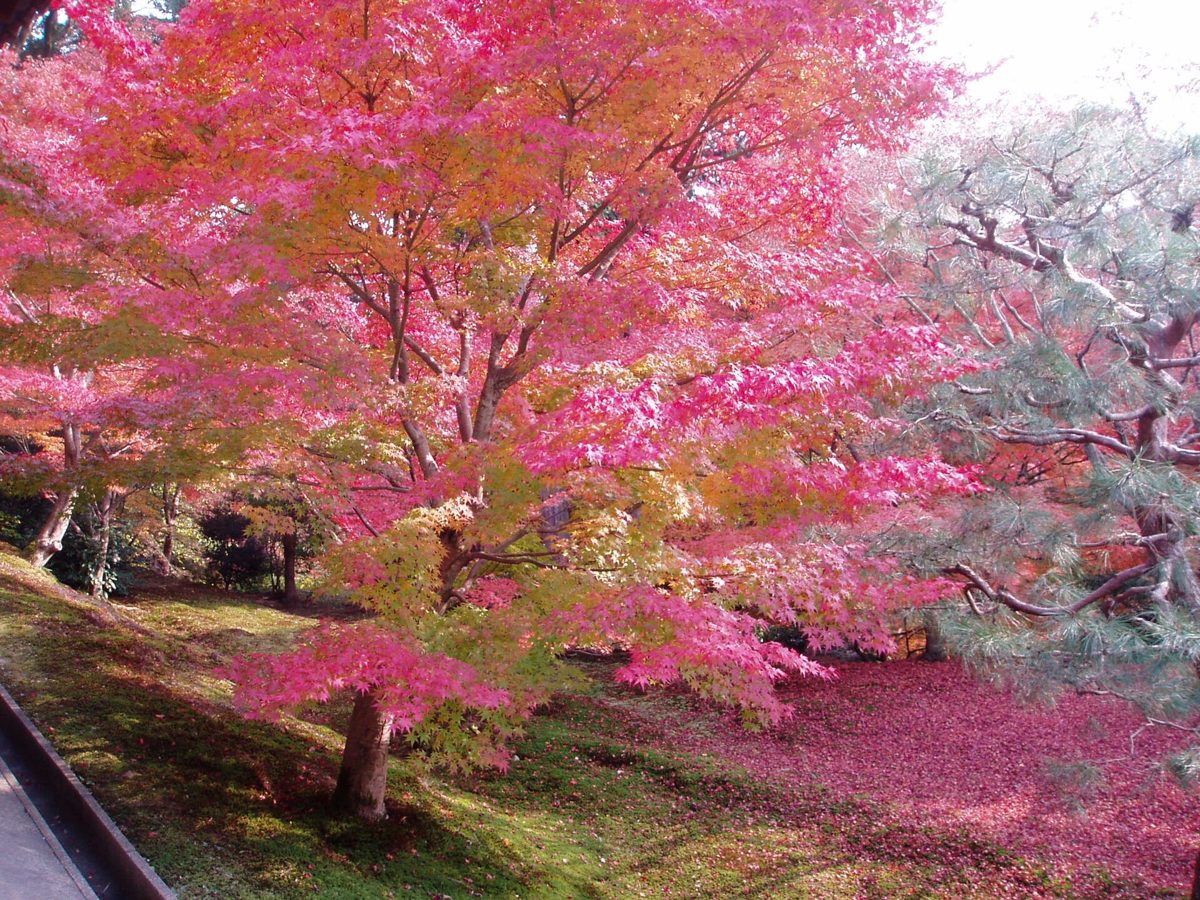
Late-season autumn leaves in Kyoto: Tofukuji Temple, about 2,000 maple trees over a small valley. Tip: the Gaunkyo bridge is free and gives the classic view of Tsutenkyo bridge.
Why Tofukuji in late autumn
Tofukuji is a large Zen temple in Higashiyama, Kyoto, and it is often said to be one of the last places in the city where the autumn leaves are still at their best. The usual peak is mid November to early December, so it is a good bet if you arrive in Kyoto after the leaves elsewhere have started to fall.
Three things make it special: about 2,000 maple trees filling a small valley, a covered bridge that lets you look down on them, and a free bridge with the classic view.
A little history
The temple was built over 19 years, from 1236 to 1255, and was later ranked fourth among the Five Great Zen Temples of Kyoto. Its name takes one character each from two great temples in Nara: Todaiji and Kofukuji. Today 25 sub-temples still stand on the grounds.
Tsutenkyo bridge and the Sengyokukan valley
The maples grow mostly around a valley called Sengyokukan. Tsutenkyo, a covered bridge across the valley, gives you the rare view of looking down on a sea of red leaves.
Crossing Tsutenkyo requires an admission ticket. Prices and dates change from year to year, so check the official site before you go.
The free view: Gaunkyo bridge
Near the entrance, just downstream, Gaunkyo bridge is free to cross. From here you get the classic view of Tsutenkyo above the maples. If you are short on time or money, this alone is worth the trip.
Beyond the leaves
The main gate (Sanmon) is a National Treasure and is said to be the oldest surviving main gate of a Zen temple in Japan.
The Hojo garden, designed in 1939 by the landscape artist Mirei Shigemori, is a nationally designated Place of Scenic Beauty. Its north garden is famous for a checkerboard of moss and square paving stones. Entry to the garden is paid separately.
Beating the crowds
At peak season the bridges get very crowded, and photography on the bridges may be banned when it is busy. Arrive early in the morning for the calmest visit.
Getting there
Take the JR Nara Line one stop from Kyoto Station to Tofukuji Station (the Keihan Line also stops here), then walk about 10 minutes. Toba-kaido Station on the Keihan Line is also within walking distance.
Pair it with Fushimi Inari
Inari Station, the stop for Fushimi Inari Taisha, is the very next station on the JR Nara Line. A popular half-day plan: see the leaves at Tofukuji in the morning, then ride one stop to the famous torii gate tunnels.
The main torii tunnel takes about 20 to 30 minutes, while the full hike up the mountain takes two to three hours. Wear comfortable shoes.
Key info
| Best time | Mid Nov - early Dec (typical) |
|---|---|
| Access | JR Tofukuji Sta., ~10 min walk |
Info as of writing. Check official sites for current hours and prices.
Sources
- https://tofukuji.jp/history/
- https://www.nippon.com/ja/guide-to-japan/gu900065/
- https://www.keihan.co.jp/momiji/kyoto/spot/toufukuji.html
- https://weathernews.jp/koyo/spot/26111/
- https://allabout.co.jp/gm/gc/476912/
- https://www.nta.co.jp/media/tripa/articles/jKaHW
- https://www.city.kyoto.lg.jp/kensetu/cmsfiles/contents/0000021/21776/higashiyama16.pdf
- https://mb.jorudan.co.jp/os/rosen/nara_line/
- https://kotobank.jp/word/東福寺-104087
Photo credits
- Maechan0360 / CC BY-SA 4.0 — Wikimedia Commons
- lumoplank / CC0 — Wikimedia Commons
- +- / CC BY-SA 3.0 — Wikimedia Commons


